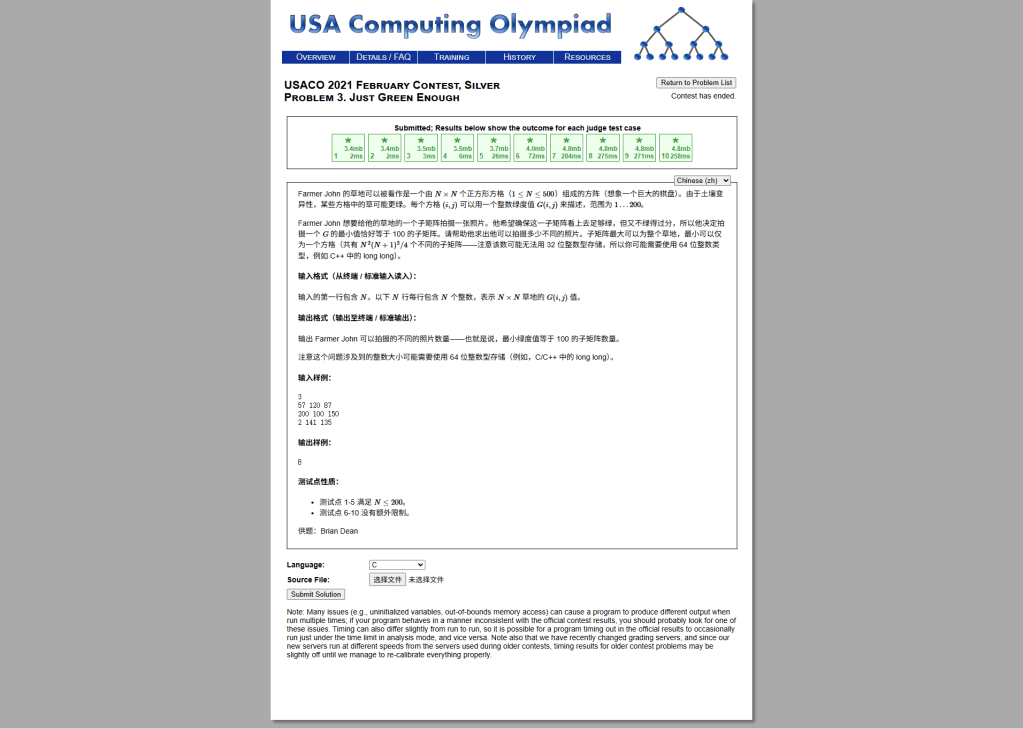
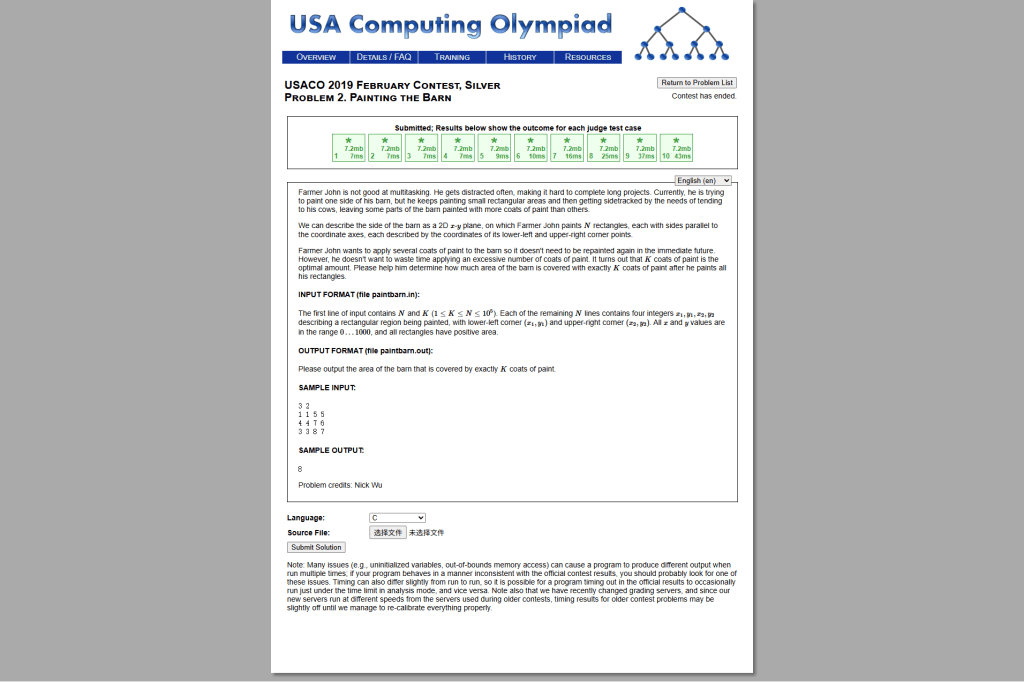
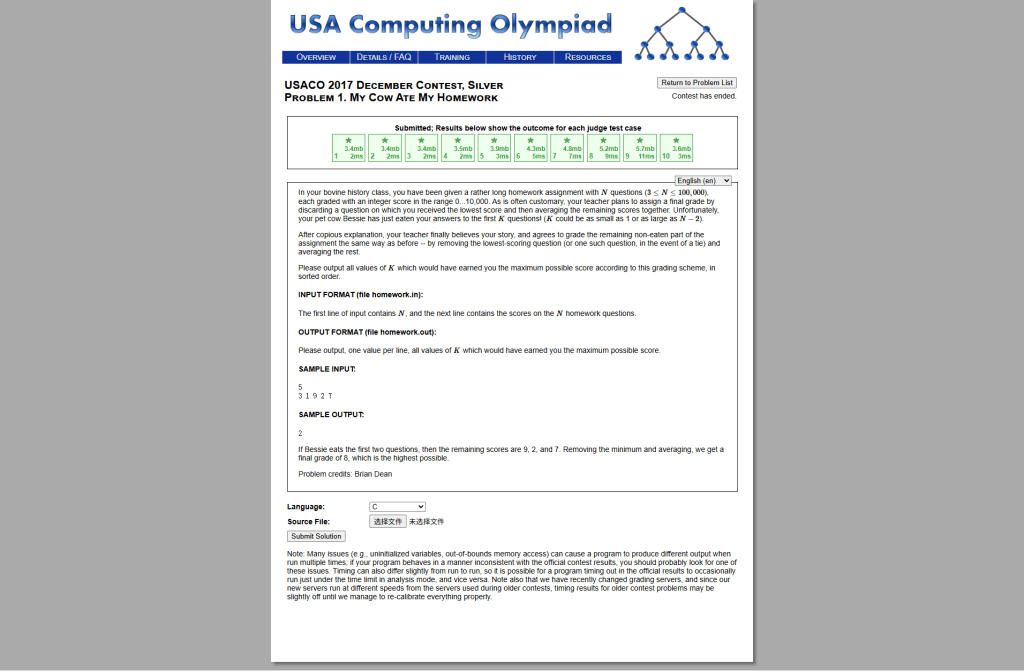
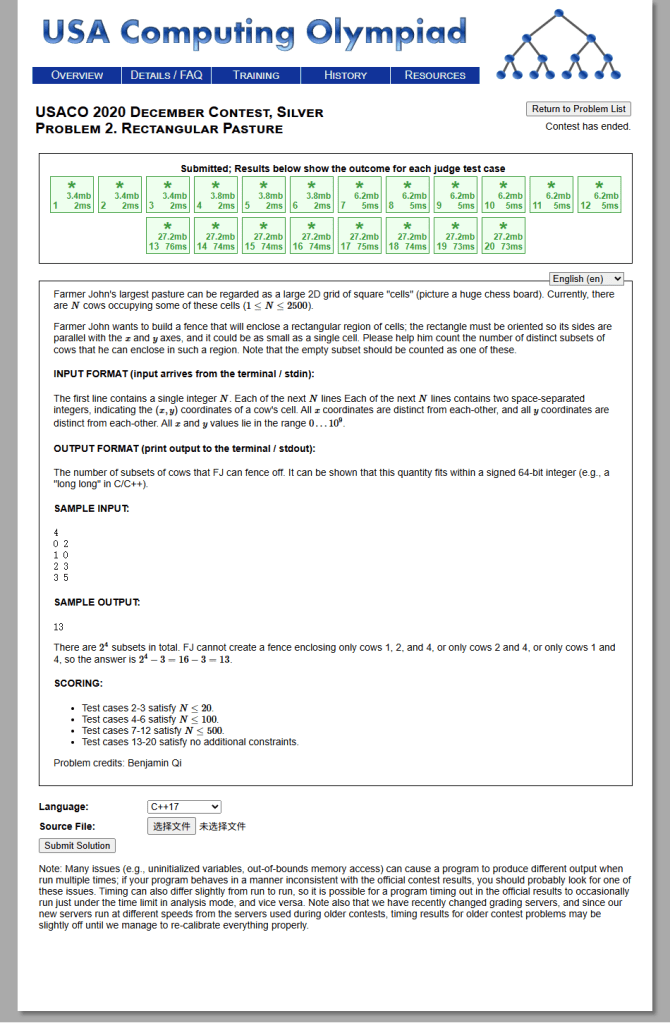
Over the past few weeks, I’ve been practicing for the USACO Silver contests and solving a wide variety of problems that have helped me grow as a competitive programmer. Through these problems, I’ve learned several important algorithms and techniques, including prefix sums, DFS, BFS, reverse and multi source BFS, flood fill, greedy algorithms, and the two pointer technique.
One important lesson I’ve discovered while solving USACO problems is that it’s crucial not to jump straight into coding after reading the problem. If your initial idea or algorithmic concept is wrong, you might end up wasting a lot of time debugging or rewriting your solution. Instead, it’s better to analyze the constraints, for example, looking at the values of N and T to determine whether the problem can be solved with brute force, a two pointer approach, or if it requires a more optimized or mathematical solution.
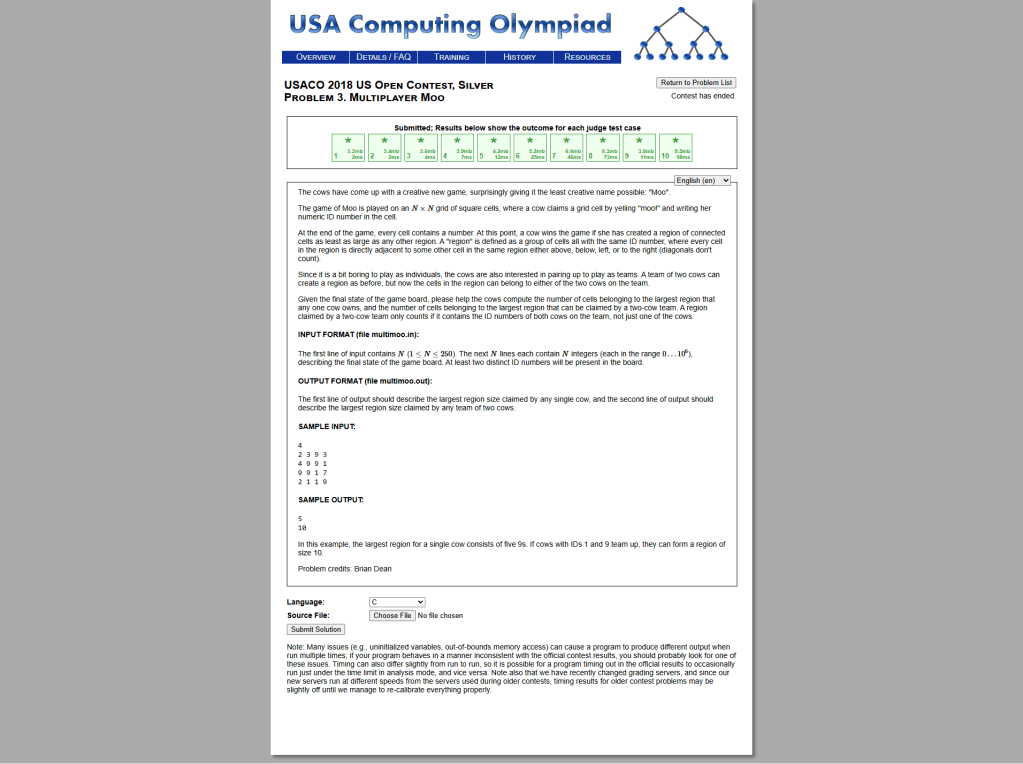
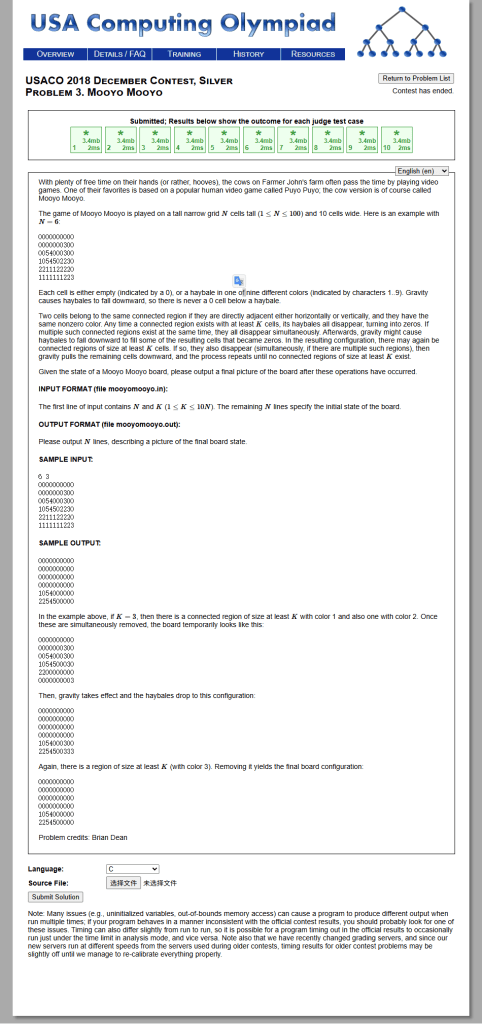
Among the problems I’ve solved, one that I found challenging and both fun was “Multiplayer Moo.” The difficult part of this problem was finding the largest connected region consisting of two distinct numbers. A brute force approach that checks all possible pairs would be far too slow possibly N^2. The key insight is to only consider numbers that are adjacent to each other in the grid. By doing this, you can efficiently check which regions are connected. It’s also important to maintain an auxiliary array to keep track of visited cells or connected components that have already been processed.
https://github.com/Jasper-World/USACO
 Jasper World