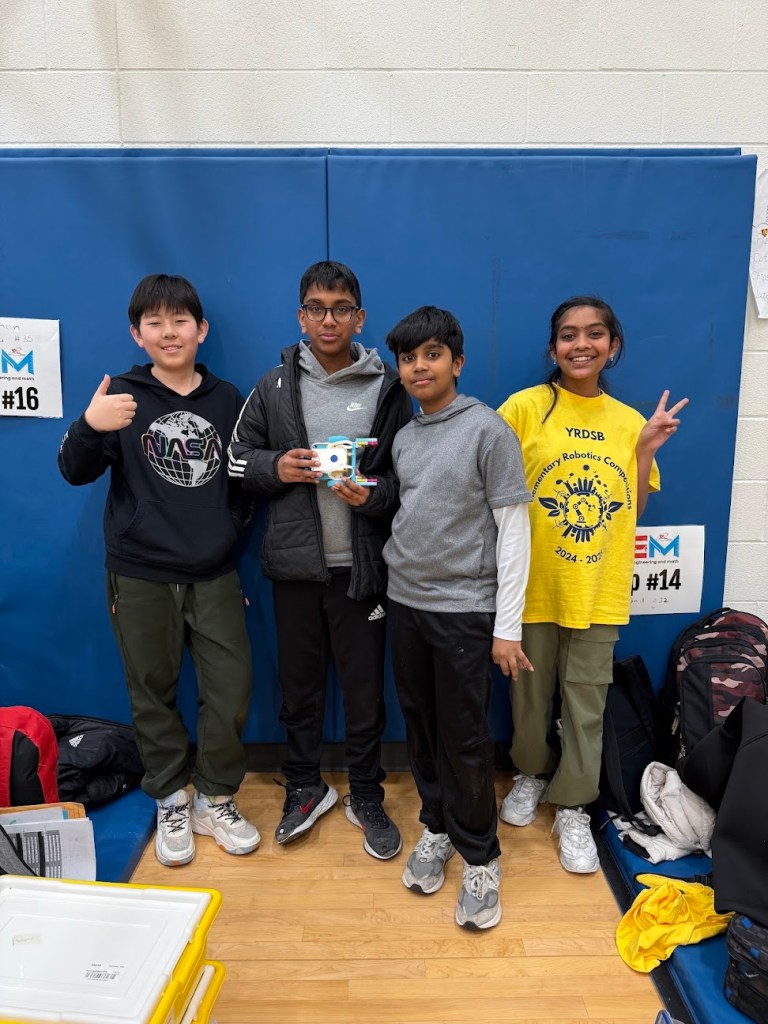
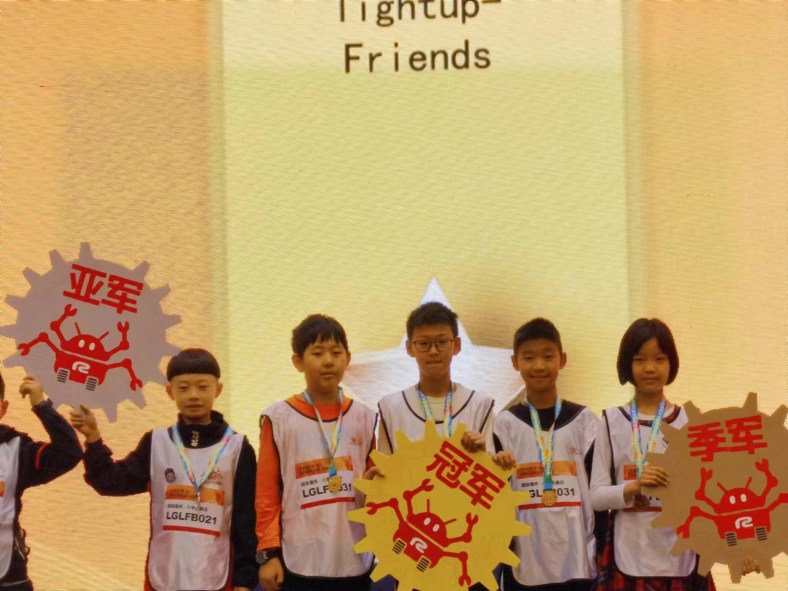
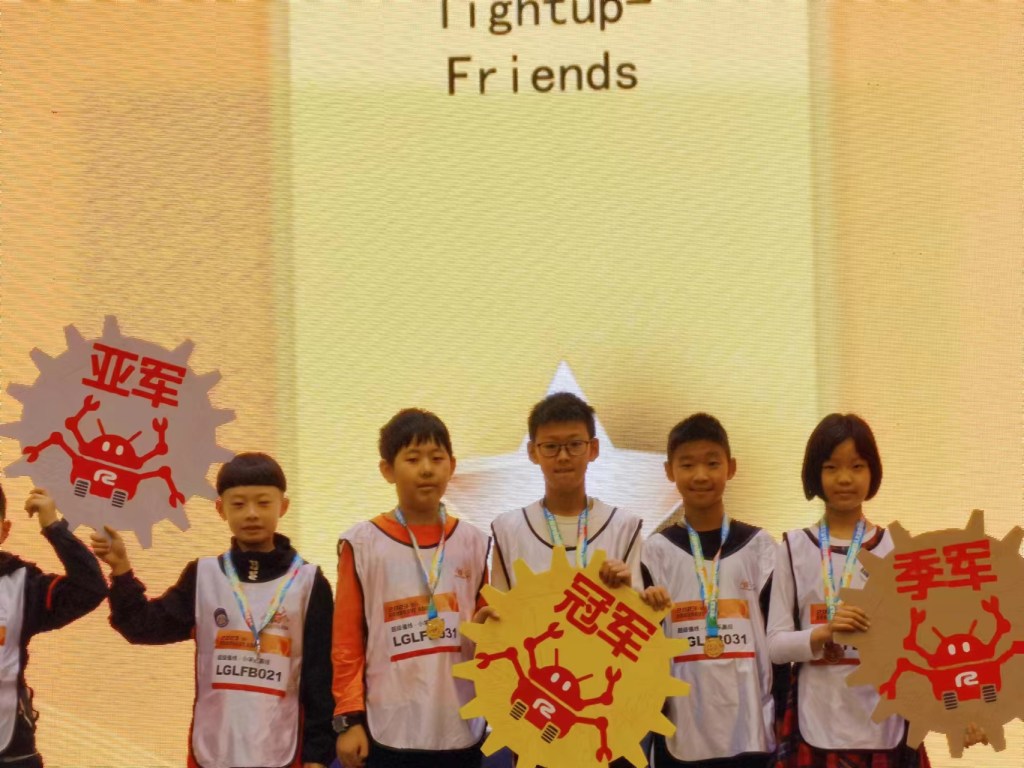
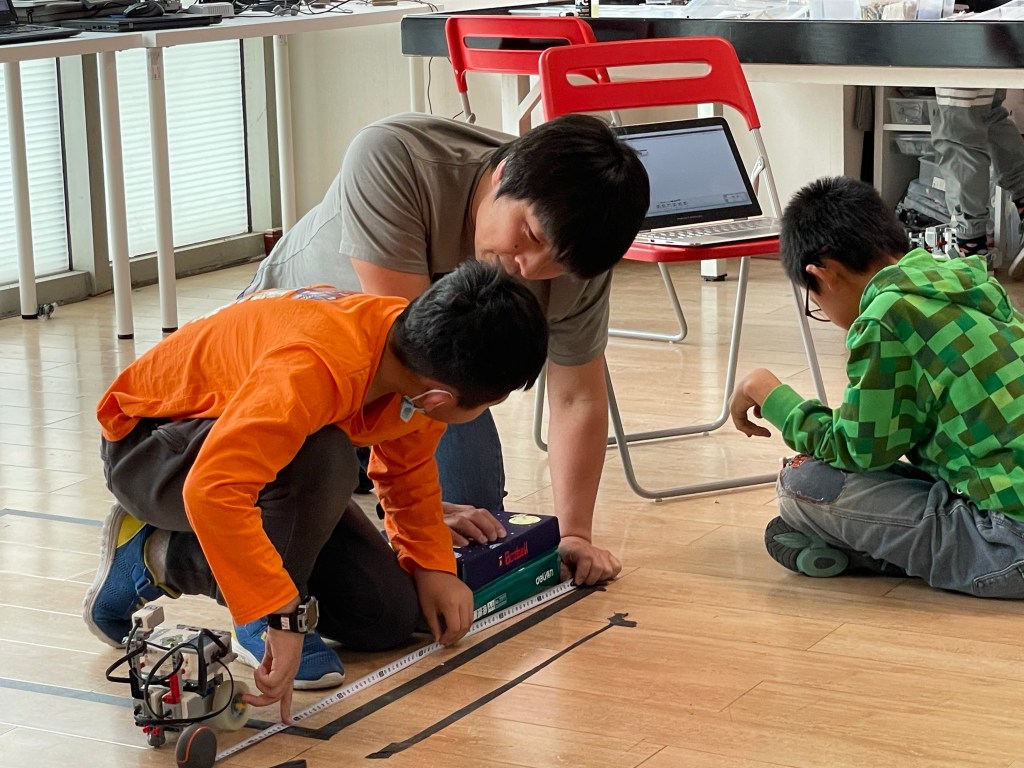
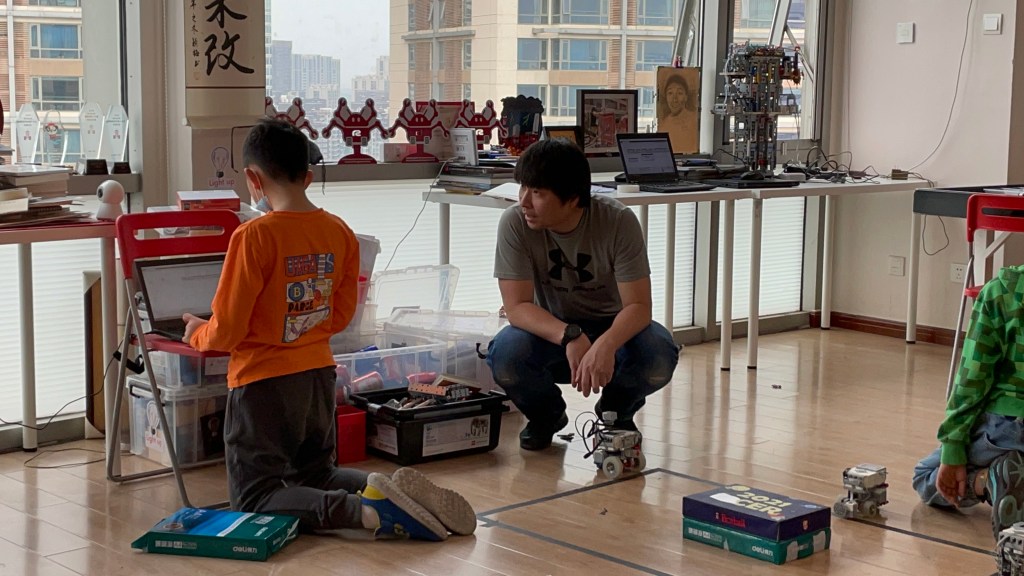
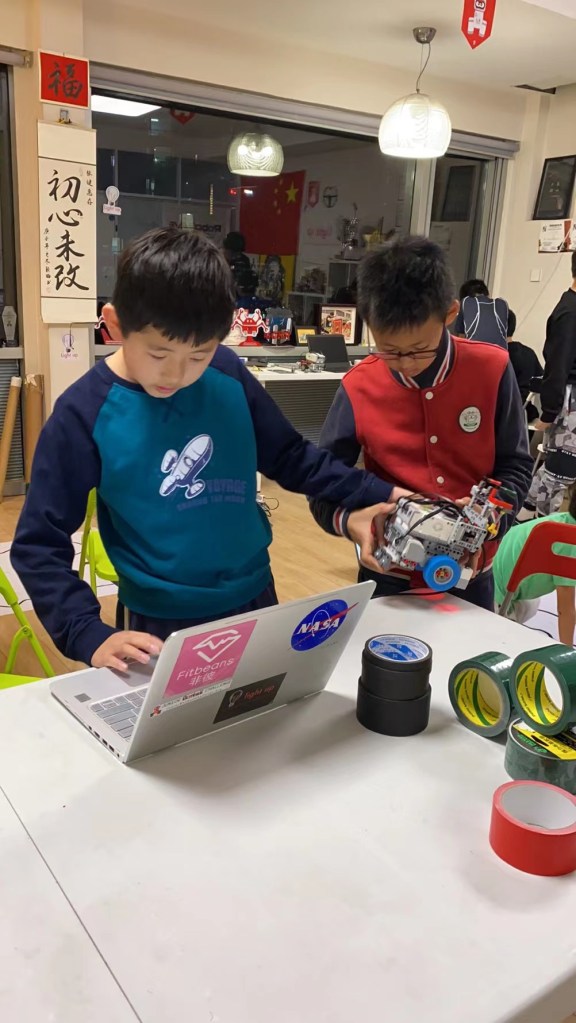
On February 26, my team and I represented Randall Public School at the YRDSB Elementary Robotics Competition in the Junior Division. Our team consisted of four members, including myself, and I was the team leader. The competition required us to program a robot to complete various challenges, such as picking up blocks, shooting caps into a box, and pushing blocks. Participants were allowed to use either VEX or EV3, and one of my teammates chose VEX. However, I personally preferred EV3, as I had years of experience with it and had won championships in competitions like Roborave and the Botball Asia Division using EV3. Despite my preference, the biggest challenge was not the platform but the strict time limit. Every team member needed to be in the right position and fully focused on the robot’s movements. Additionally, our coding had to be extremely precise, as the course contained negative caps knocking them over would result in point deductions.
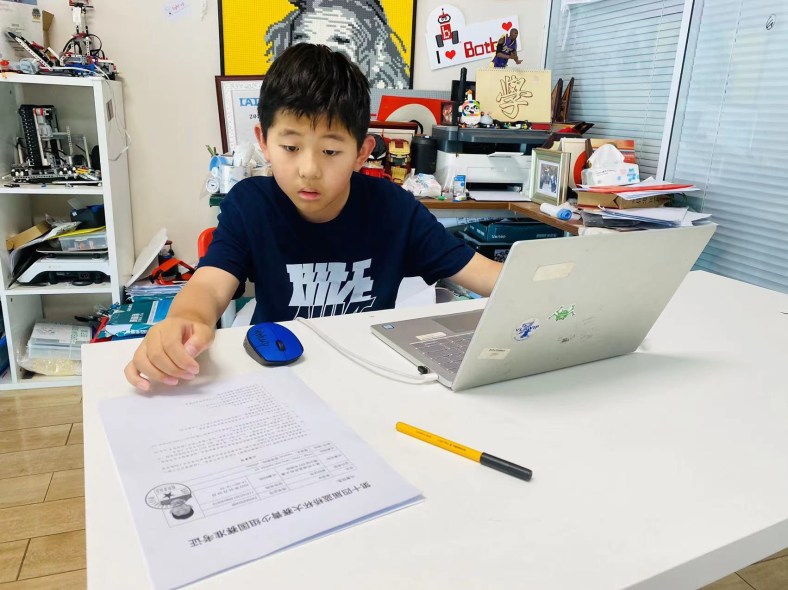
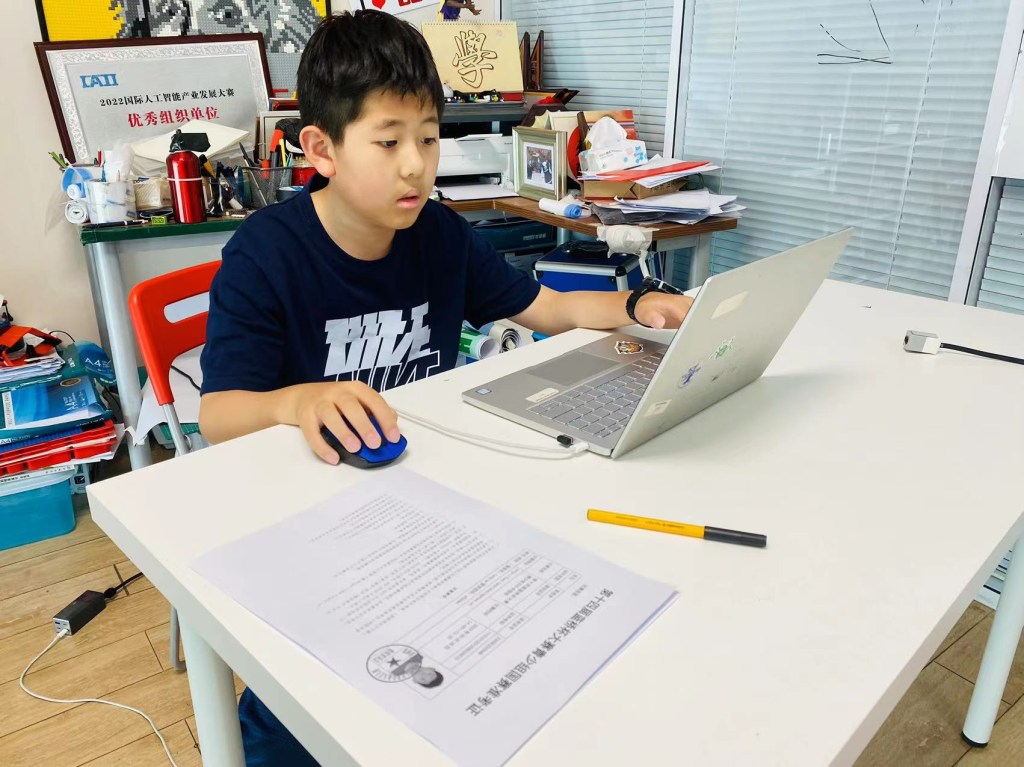
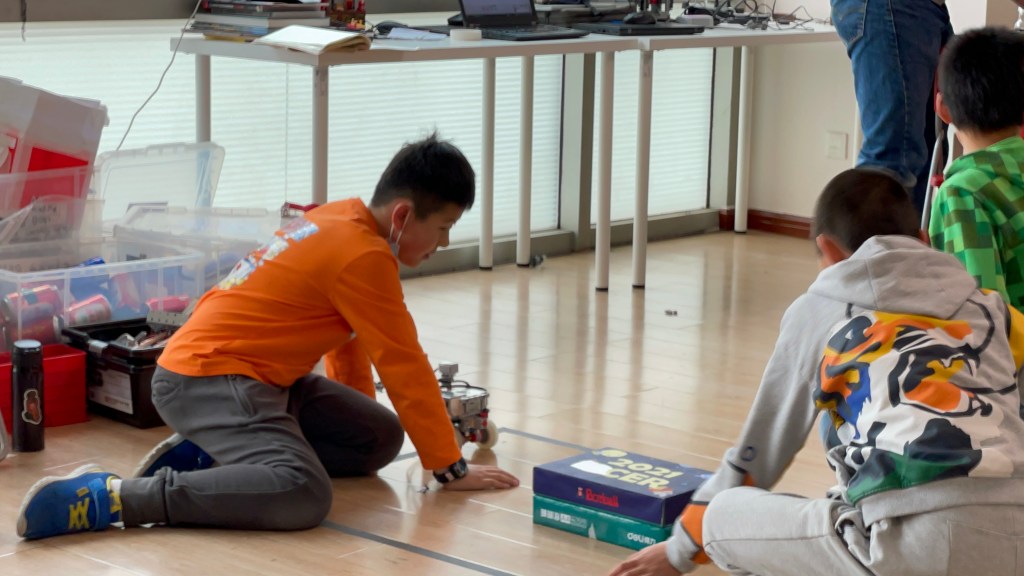
After a few days of working together, I assigned roles based on everyone’s strengths. Another teammate and I took charge of coding I had extensive coding experience, while he had his own laptop, making programming more efficient. One of the boys, who was highly skilled in math, was responsible for analyzing the robot’s movements and calculating the angles needed for precise turns. This helped reduce the time spent adjusting the code repeatedly. The fourth member, a shy girl who was great at following instructions, was responsible for assembling the robot and placing cones in the correct positions. However, during the competition, we encountered an issue—having only one person handling the cones was too slow. To improve efficiency, I adjusted our strategy by assigning the movement analyst to assist with cone placement. Additionally, I noticed that my co coder was struggling with speed and accuracy, so I took over the coding myself. This doubled our efficiency, and after seeing my coding and building skills in action, my teammates acknowledged me as their leader.
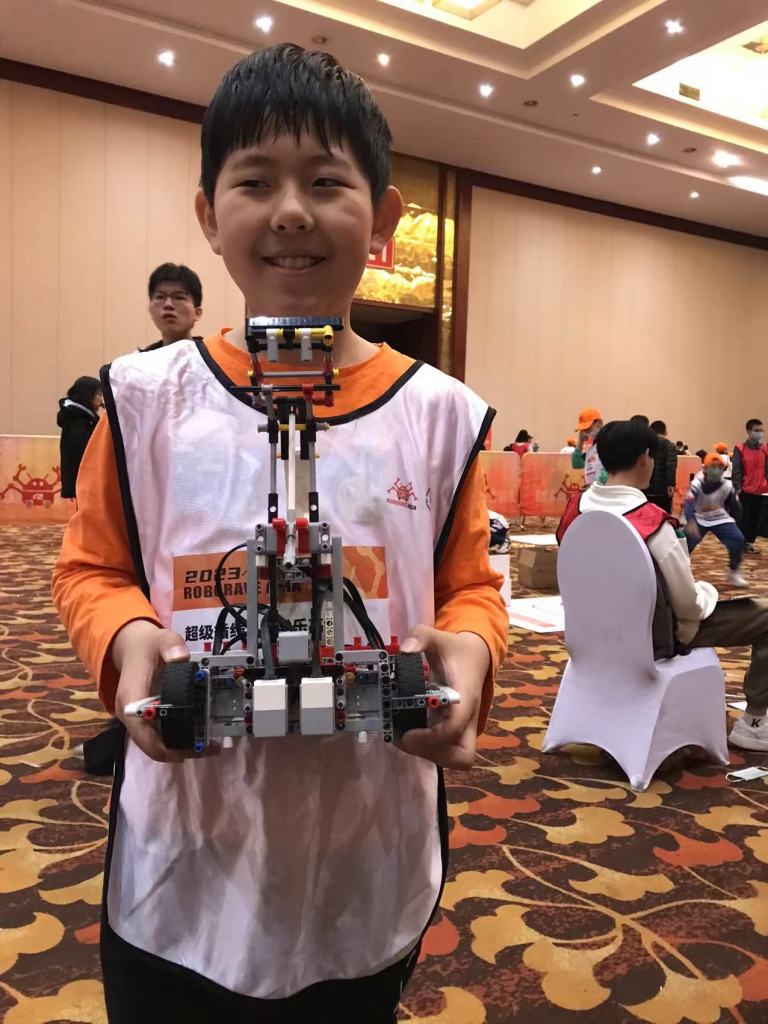
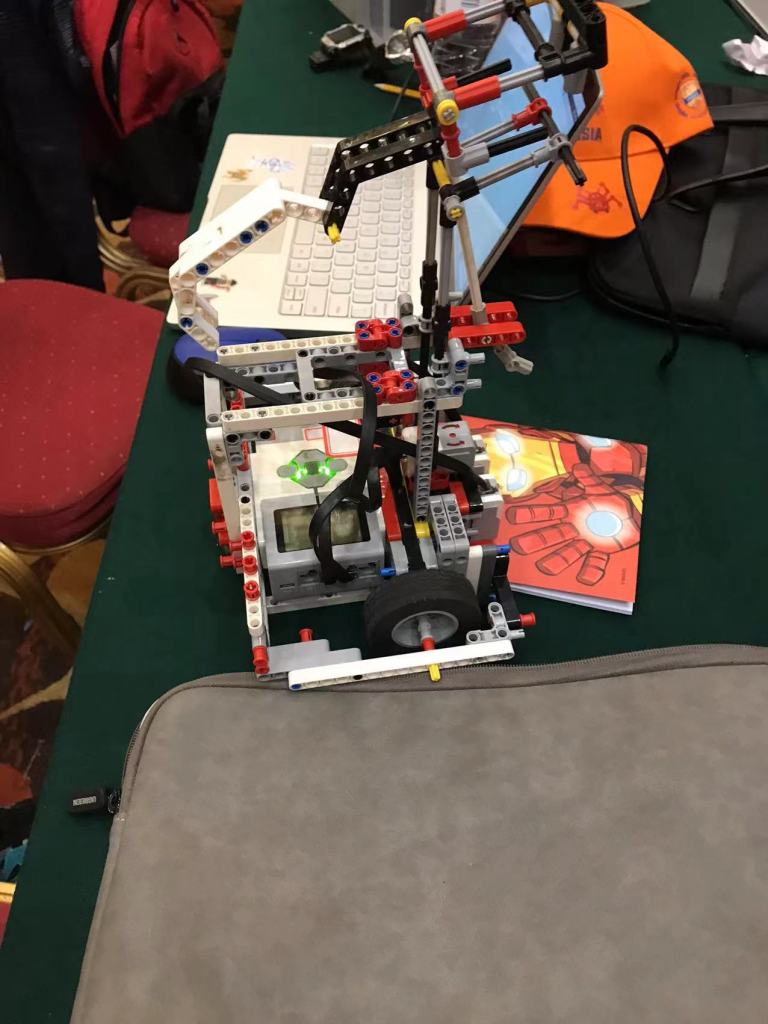
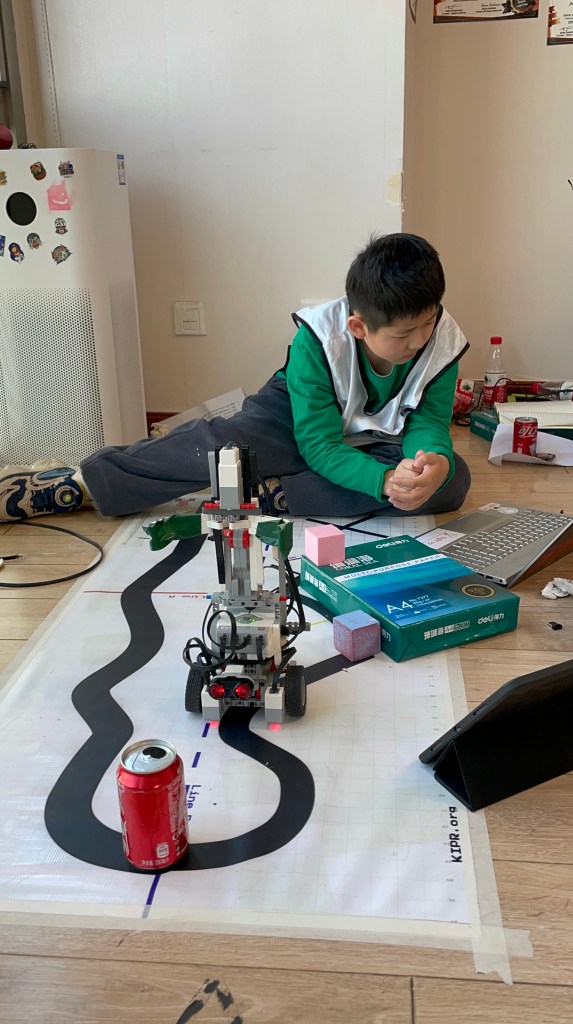
I carefully studied the competition rules and designed our robot based on the required tasks. Since many challenges involved pushing and grabbing blocks, I created two key attachments: a grabber, built using a small motor, shafts, gears, and two J-shaped beams with rubber bands for extra grip, and a pusher, a large wall with a baffle at the edge to keep blocks contained, which we could swap in when needed. I also ensured our robot was as compact as possible while incorporating all necessary functions. Surprisingly, I found that positioning two small motors correctly created a perfect gap for the large motor, which held the grabber securely. One unexpected challenge was the competition venue itself. The floor at Victoria Square had lower friction than the one at Randall, reducing the robot’s traction. Since we didn’t have enough time to adjust the code, I quickly added a counterweight at the back of the robot to increase traction and stabilize its movement. This solution worked perfectly the robot performed just as it had during practice. Additionally, my grabber functioned flawlessly and proved to be a reliable and steady mechanism. While observing other teams, I discovered alternative approaches, such as simply scooping up the caps, which I found impressive.
After building our robot, my team and I began coding. I could have incorporated advanced techniques, including variables, functions, and loops. But since my teammate had already written part of the code, I had to continue from where he left off. The first major task was cap collection, which required extreme precision due to the small size of the caps if the robot wasn’t perfectly aligned, the caps will fall out. Since we had only started on February 1st, I was only able to code the cap grabbing and block pushing tasks. We frequently knocked over negative caps, forcing us to revise our code multiple times. If the competition had allowed color sensors, I could have programmed the robot to follow a white line surrounded by caps, making navigation much easier. Despite the time constraints, everything worked out well. We scored 258 points, surpassing our school’s Grade 8 division, which had started 10 days earlier but scored 20 points less than us. I found this achievement remarkable. Additionally, I implemented a self returning function, allowing the robot to navigate back on its own while earning an extra 20 points, further boosting our score.
One major challenge during the competition was time management. When we arrived at Victoria Square, we wasted valuable time locating our designated spot. Once settled, we lost even more time troubleshooting the robot’s gripping mechanism. Another issue was our slow start in the early days of preparation my teammates spent too much time debating the robot’s base design rather than focusing on execution. While teamwork and planning are important, this delay significantly impacted our progress. Moving forward, I plan to streamline the design phase and allocate more time to coding, as it is the most critical and time-consuming part of the competition.


 Jasper World